Latest Book :
Recent Books
Showing posts with label Economie. Show all posts

Fundamentals of Reaction Engineering

                                           
Fundamentals of Reaction Engineering


This is an introductory text covering the basic elements of reactor design. The focus is on simple flow patterns. Material and energy balances have been derived for continuous stirred tank reactors and tubular flow reactors, assuming plug flow. Non-ideal flow is briefly discussed. The important case of exothermic-reversible reactions has been discussed in the context of staged reactors, with interstage or cold-shot cooling. The analysis of heat and mass transfer to/from catalyst pellets in fixed bed catalytic reactors has been introduced, emphasizing the formulation of global reaction rate expressions. Different ways of modeling FBCRs has been described


http://www.zums.ac.ir/files/research/site/ebooks/chemistry-chemical-engineering/fundamentals-of-reaction-engineering.pdf


Capitalism 3.0: A Guide to Reclaiming the Commons

                                           
Capitalism 3.0: A Guide to Reclaiming the Commons


Barnes' idea is that we need to use a 3rd institution - "the commons" - to develop a better form a capitalism that takes into account natural resources that are used and not accounted for. This is needed, because government has failed to do a good job in this regard and is subject by capture by industry, something that is very prevalent in the USA. The commons works by being above the short term exigencies of businessmen and politicians, using the power of property rights under legal trusteeship to ensure that the commons under trust are best used for the long term


http://capitalism3.com/files/Capitalism_3.0_Peter_Barnes.pdf
 

The Economics of Liberty

                                           
The Economics of Liberty


Ludwig von Mises Institute advocates the free market, private property, individual liberty, and sound money. In this publication the authors battle old threats like central banking and bureaucracy, and new threats like civil rights and Green-o-mania


http://www.mises.org/books/economicsofliberty.pdf
 

Wall Street and the Bolshevik Revolution

               Wall Street and the Bolshevik Revolution                             


The State Department Decimal File contains extensive documentation on the hypothesized link between Wall Street and the Bolshevik Revolution. When the evidence in these official papers is merged with nonofficial evidence from biographies, personal papers, and conventional histories, a truly fascinating story emerges. We find there was a link between some New York international bankers and many revolutionaries, including Bolsheviks. These banking gentlemen, who are here identified, had a financial stake in, and were rooting for, the success of the Bolshevik Revolution


http://www.google.com/url?sa=t&rct=j&q=&esrc=s&source=web&cd=1&ved=0CCsQFjAA&url=http%3A%2F%2Fwww.voltairenet.org%2FIMG%2Fpdf%2FSutton_Wall_Street_and_the_bolshevik_revolution-3.pdf&ei=4_VyUqCCJMjF7Aac2YHgAw&usg=AFQjCNHPtJEdrS03hKwBNWjxml6i_4UmFg&sig2=FuUvCvVShTm6DIQpPiubFA&bvm=bv.55819444,d.ZGU&cad=rja
 

A Century of War

                                           
A Century of War


John Denson, in a book that covers the history of America's large wars from 1860 through the Cold War, describes the twentieth century as the bloodiest in all history not coincidentally a century of statism. Denson recounts how the wars that destroyed American liberty came about through a series of deceitful political ploys. He provides a close examination of the rise of executive dictatorship, and demonstrates how far from the founders' vision of government we have come. It explains how world peace can only come through the practice of free trade and free markets, and why large government can only create conflict both domestic and international


http://mises.org/books/century.pdf
 

Power and Market: Government and the Economy

                                           
Power and Market: Government and the Economy


What can government do to enhance social and economic well being? Nothing, says Murray N. Rothbard. Power and Market contains the proof. It will inoculate the reader against the even the slightest temptation to invoke the state as a solution to any social or economic problem. It is ultimate manual for completely de-mystifying the myth of the state. The Rothbardian claim is perhaps the most radical made in the history of political economy


https://mises.org/books/powermarket.pdf
 

China: Linking Markets for Growth

                                           
China: Linking Markets for Growth


In sustaining its strong economic growth, China has become one of the world’s most voracious consumers of energy. The challenge now facing the government and people of China is in achieving cooperation with the international community to avert the costs of accelerating energy consumption. This book gathers together leading scholars on China’s economic success and its effect on the world economy into the next few decades


http://epress.anu.edu.au/wp-content/uploads/2011/06/whole_book2.pdf
 

Transforming Global Information and Communication Markets


Transforming Global Information and Communication Markets


 This pathbreaking examination of information and communication technology from a political economy perspective argues that continued rapid innovation and economic growth require new approaches in global governance that will reconcile diverse interests and enable competition to flourish. The authors discuss this crucial turning point in both theoretical and practical terms, analyzing changes in ICT markets, examining three case studies, and considering principles and norms for future global policies


http://globalinformationandtelecom.files.wordpress.com/2009/02/book.pdf
                                  

America's Great Depression

                                           
America's Great Depression


Murray N. Rothbard's America's Great Depression is a staple of modern economic literature and crucial for understanding a pivotal event in American and world history. Since it first appeared in 1963, it has been the definitive treatment of the causes of the depression. The book remains canonical today because the debate is still very alive


http://mises.org/rothbard/agd.pdf
 

The Global Economic Crisis: Systemic Failures and Multilateral Remedies

                                           
The Global Economic Crisis: Systemic Failures and Multilateral Remedies


The report highlights three specific areas in which the global economy experienced systemic failures. While there are many more facets to the crisis, UNCTAD examines here some of those that it considers to be the core areas to be tackled immediately by international economic policy-makers because they can only be addressed through recognition of their multilateral dimensions. The report investigates three interrelated issues of importance to developed and developing countries alike, and proposes measures to address the systemic failures they have entailed


http://www.unctad.org/en/docs/gds20091_en.pdf
 

The End of Economic Growth

                                           
The End of Economic Growth


Charles Siegel has managed to make this book both readable and pro-active. His assessment of the counterproductivity of our economy and consumer society is persuasive, lucid, fact-filled, and especially timely in an era when we must decide how much is enough for ourselves - and for a sustainable planet


http://www.google.com/url?sa=t&rct=j&q=&esrc=s&source=web&cd=5&ved=0CFoQFjAE&url=http%3A%2F%2Fase.tufts.edu%2Fgdae%2FCS%2FEndGrowth.pdf&ei=kPFyUuq-NKiN7Ab76YCwBg&usg=AFQjCNFqo1TzMTw9MchNZI-3BZ8JcQ4DzQ&sig2=325G_oTW1W49o3LfH_ip4A&bvm=bv.55819444,d.ZGU&cad=rja
 

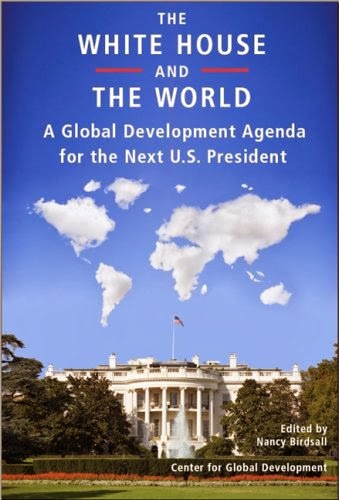
The White House and the World

                                           
The White House and the World


The Center for Global Development has a track record of providing important insights into how the United States can improve global development policy and thereby tackle some of the world's most intractable problems. This book continues that tradition and helps advance our understanding about how the next administration can improve a critical arm of our global engagement


http://www.cgdev.org/files/16560_file_White_House_and_the_World.pdf
 

Privatization of Roads and Highways


Privatization of Roads and Highways


Walter Block's remarkable new treatise on private roads, will cause you to rethink the whole of the way modern transportation networks operate. It is bold, innovative, radical, compelling, and shows how free-market economic theory is the clarifying lens through which to see the failures of the state & see the alternative that is consistent with human liberty


http://mises.org/books/roads_web.pdf
 

The Causes of the Economic Crisis


The Causes of the Economic Crisis


Here we have the evidence that the master economist foresaw and warned against the breakdown of the German mark, as well as the market crash of 1929 and the depression that followed. He presents his business cycle theory in its most elaborate form, applies it to the prevailing conditions, and discusses the policies that governments undertake that make recessions worse. He recommends a path for monetary reform that would eliminate business cycles and provide the basis for a sustainable prosperity


http://mises.org/books/causes.pdf
 

The Betrayal of the American Right


The Betrayal of the American Right


This remarkable piece of history will change the way you look at American politics. It shows that the corruption of American "conservatism" began long before George W. Bush ballooned the budget and asserted dictatorial rights over the country and the world. The American Right long ago slid into the abyss


http://mises.org/books/betrayal.pdf
 

The Decline of the American Republic


The Decline of the American Republic


In 1955, John T. Flynn saw what few others journalist did: the welfare-warfare state conspired to bring down American liberty. The New Deal combined with World War Two had fastened leviathan control over a country born in liberty. This early analysis of the causes of the Great Depression and the failure of the New Deal also notes a point later demonstrated in detail by Robert Higgs: the economic boom of WW2 was false in every way, an artifice created by misleading government data and inflationary finance


http://mises.org/books/decline.pdf
 

Global Imbalances and the Collapse of Globalised Finance


Global Imbalances and the Collapse of Globalised Finance


The world economy is just starting to recover from the most disastrous episode in the history of financial globalization. Understanding what happened is essential. The authors argue in this book that the main problems were deeply rooted and are to be found in two tightly linked developments that for many years were left largely uncontrolled: the increase in the intensity of international transfers of savings -- the so-called 'global imbalances' -- and a wave of innovations -- globalized finance -- that have changed the way savings and the risks associated with their investment can be transferred


http://www.ceps.eu/ceps/dld/2923/pdf
 

The Decline of American Capitalism

                                           
The Decline of American Capitalism


The depression which set in after 1929 was the worst economic disaster in American history. It was aggravated by the acute world crisis, a major catastrophe of capitalism. The revival, largely because of its inflationary and speculative character, did not lead to recovery


https://archive.org/download/declineofamerica00corerich/declineofamerica00corerich.pdf
 

Betrayal Of Americanism


Betrayal Of Americanism


Author Hem Raj Jain writes candidly about the collapse of the United States financial industry. Jain takes the reader through a series of factors that he believes were the foundation of the 2007 crisis. Jain also offers solutions; steps that he believes the United States government and its people can take that will pull the country out of its current crises and on to a stronger economy
http://www.google.com/url?sa=t&rct=j&q=&esrc=s&source=web&cd=3&ved=0CDoQFjAC&url=http%3A%2F%2Fwww.insearchoftheuniversaltruthpublisher.com%2Ffiles%2FBetrayal_for_look_inside.pdf&ei=r-xyUuPDHcXD7AbXnYCQDA&usg=AFQjCNHN4FmEvx5hwUJovSf88QyO9FYZhg&sig2=qJ01RVuv_uloutS8I-WCvQ&bvm=bv.55819444,d.ZGU&cad=rja

Case for Legalizing Capitalism


Case for Legalizing Capitalism


What's the American system of economics? Most people would say it is capitalism, which thereby deserves all fault when anything goes wrong. Well, Kel Kelly responds to this myth in this fast-paced and darn-near comprehensive treatment of the truth about the free market and intervention


http://mises.org/books/capitalism_kelly.pdf